

05 Aug Hot Take: GEO is the new ABM
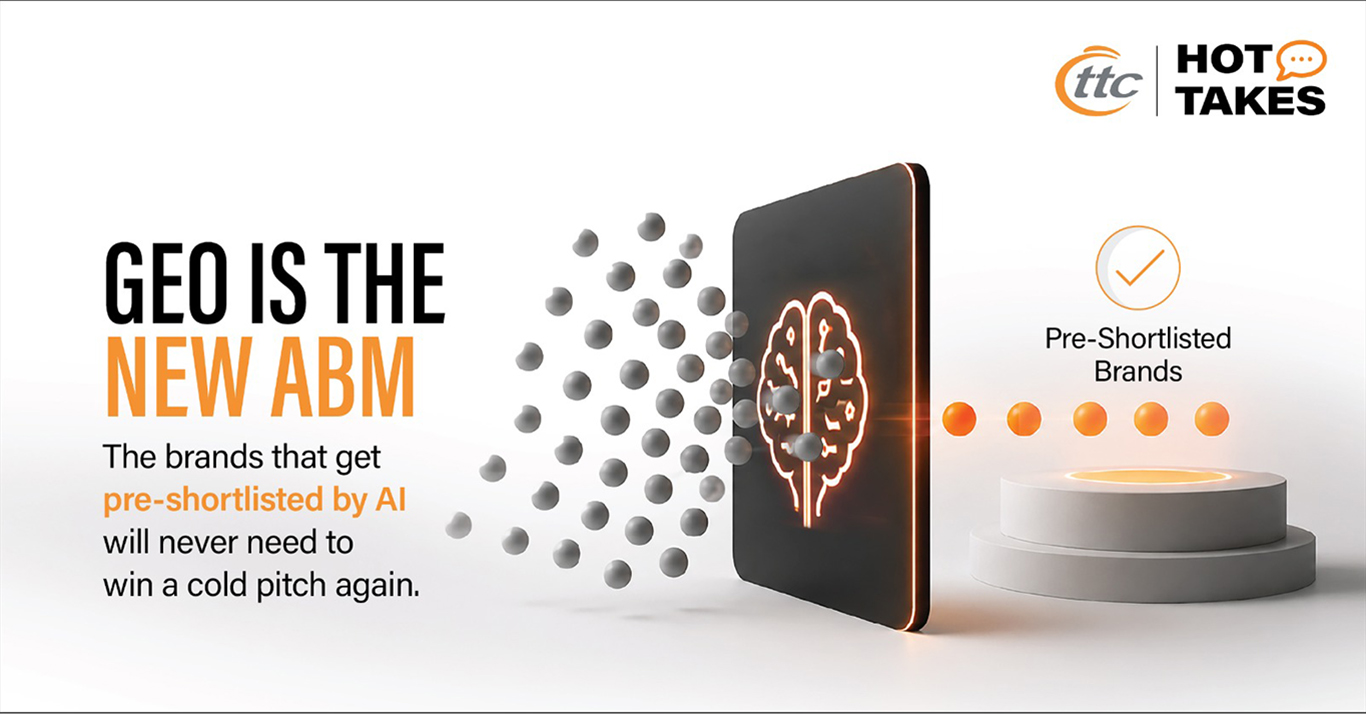
(The brands that get pre-shortlisted by AI will never need to win a cold pitch again)
ABM spent a decade and billions of dollars trying to solve one problem: get your brand in front of the right account before competitors did. Generative Engine Optimisation does it automatically. At scale. Before the buyer even opens a browser.
Here’s what’s happening right now while your team is busy optimising landing pages.
A CTO at a 400-person IT services company has a problem. Before they brief their team, before they build a shortlist, before they contact a single vendor, they open ChatGPT or any other LLM and ask: “What are the best B2B marketing partners for IT companies in 2026?” They get an answer. With names. That answer is their shortlist. Everything that follows- the research, the demos, the proposals- is just validation of a decision that was already forming in that conversation.
If your brand isn’t in that answer, you weren’t considered. Not even rejected, just not considered at all. Not evaluated and passed over. Simply never in the room. That’s not a sales problem. That’s not a positioning problem. That’s a visibility problem in a channel most B2B teams haven’t started building for yet.
“ABM tried to reach the right account before the competition. GEO reaches them before the competition even knows the search happened. It’s pre-intent influence, and the window to build it is right now.”
The numbers are stark. 50% of B2B software buyers now start their research in AI chatbots: a 71% jump in just four months. Successful GEO increases LLM visibility by approximately 40%. Early AEO adopters capture 3.4x more visibility than late movers. And AI-sourced traffic converts at 4.4x the rate of standard organic visitors because they arrive already educated, already decided, already looking for confirmation rather than information.
That last number is the one worth sitting with. Not the traffic volume. The conversion rate. Buyers who arrive via AI citation aren’t browsing. They’re validating. The hard work, the consideration, the comparison, the shortlisting; already happened inside a chatbot. You just need to have been the answer it gave.
Now let’s be honest about what GEO actually is and what it isn’t. It’s not a magic trick. It’s not about gaming an algorithm. It’s about building the kind of content that AI systems are designed to cite: structured, authoritative, specific, and backed by evidence. The same content that makes a human reader trust you makes an LLM cite you. The difference is that an LLM cites you to ten thousand buyers simultaneously.
THE TEST: Open ChatGPT, Perplexity, and Google AI Overviews. Ask the top five questions your buyers ask before they start a vendor search. Does your brand appear?
If it doesn’t, you’re already off the pre-shortlist for every buyer who searched before contacting you. That’s not a pipeline metric. It’s a visibility gap nobody is measuring.
THE PROBLEM: Most B2B content is built for publishing calendars and Google rankings. AI engines don’t reward publishing volume. They reward the ability to cite: clear structure, definitive answers, authoritative sources, and entity consistency across every platform where your brand appears.
34.5% of brands are completely invisible in AI search even when they rank #1 on Google. Traditional SEO and GEO are different disciplines with different success criteria.
THE SOLUTION: Build for citation, not clicks. Identify the 10 questions your ideal buyer asks AI tools pre-vendor search. Build tight, structured, schema-marked answers to all 10. Audit AI visibility monthly. Track where you appear, where you don’t, and who appears instead.
That gap between where you are and where you should be in AI answers is your GEO brief. It’s also the most specific, actionable content brief most B2B teams have never written.
The broader shift that GEO represents is this: the first touch in B2B has moved upstream of everything your analytics tracks. It now happens in a conversation between a buyer and an AI before a form-fill, before a website visit, before a sales email.
60% of searches end without a single click to a third-party website. The buyer got what they needed from the AI answer. If you were cited in that answer, you got credit. If you weren’t, you never existed in that moment.
ABM tried to manufacture that moment through targeting, personalisation, and outreach. GEO earns it through authority. And authority, unlike an ABM campaign, compounds. Every piece of citable content you build now is still working eighteen months from now.
Still being surfaced, still being cited, still putting your brand on shortlists you’ll never see being built.
Ask your team: What does our brand’s AI presence look like? Not our Google ranking. Not our domain authority. What does a buyer see when they ask ChatGPT a question in our category? If nobody has checked, then that’s the answer.
TTC POV:
The shortlist is being built right now. By an AI. For a buyer who hasn’t spoken to your sales team yet.
At TTC, we’re watching the same pattern repeat across B2B clients: strong SEO, strong ABM, growing pipeline. And a creeping realisation that an increasing proportion of their best new business is coming from buyers who found them through an AI answer, not a campaign. The channel wasn’t in the plan. It wasn’t in the budget. It just quietly outperformed everything with a line item.
GEO isn’t a replacement for ABM or content strategy. It’s the layer that makes both work harder by ensuring that when a buyer starts their research in an AI tool, your brand is the answer they encounter before the outreach, before the ad, before the SDR email.
Pre-intent influence at scale. That’s what ABM promised. This is what actually delivers it.