

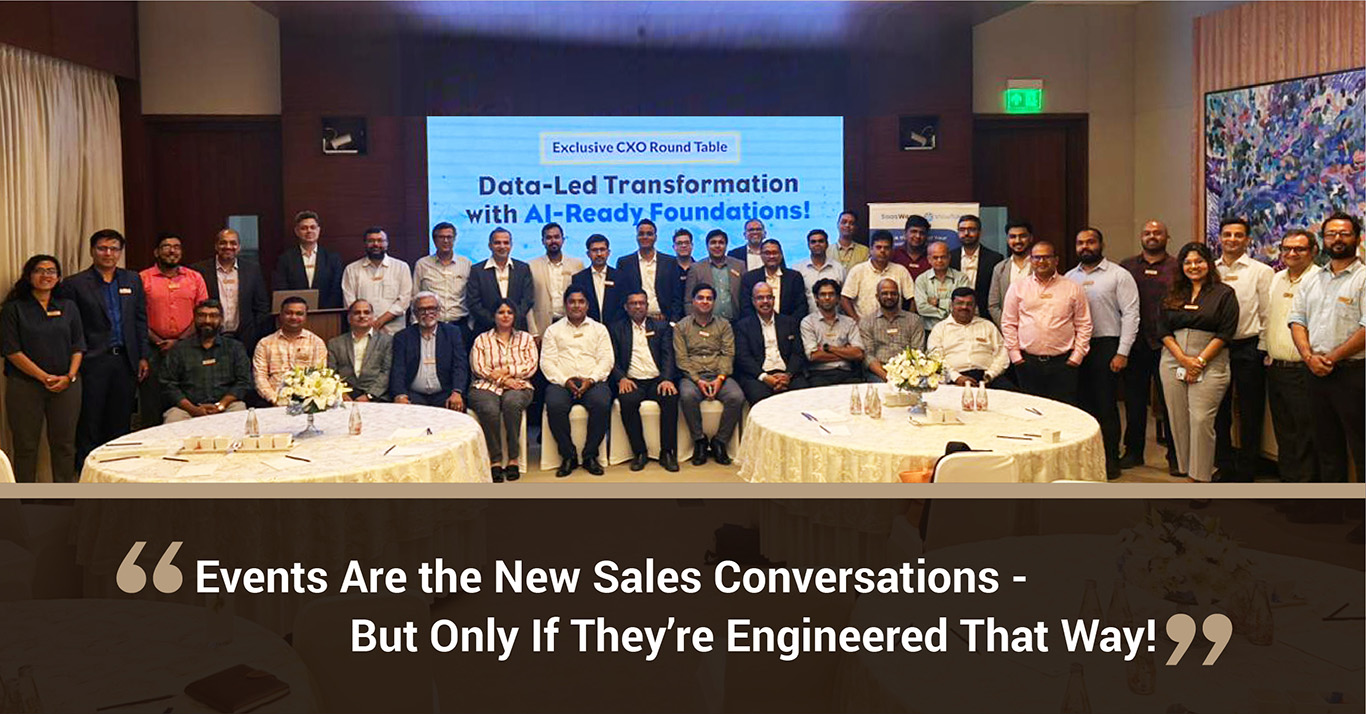
01 Aug Events Are the New Sales Conversations — But Only If They’re Engineered That Way!
For too long, B2B marketers have treated events like brand showcases — flashy booths, broad messaging, and a flood of generic content. But in today’s high-stakes buyer environment, that approach no longer cuts it.
Events aren’t awareness generators anymore. They’re sales accelerators — but only when designed to act like it.
“Events are not content platforms. They’re conversion platforms.”
— Head of Demand Gen, CloudTech Co.
This shift is subtle but critical. Modern buyers don’t need another keynote. They want conversations that validate their problems, educate their decisions, and accelerate their buying journey. Events have the power to do exactly that — when they’re architected around buyer intent, not vanity metrics.
🎯 The Misalignment That Kills Pipeline
Let’s be honest. Most events fail not because of poor logistics, but because they treat every attendee as equal and every interaction as brand awareness.
The result? Disconnected conversations and missed opportunities.
“It’s not about how many people attended your event. It’s about how many walked away closer to a buying decision.”— Nick Bennett, B2B Field Marketer & Evangelist
According to Statista (2024), 61% of B2B marketers say events deliver the highest-quality leads — better than email, paid media, or even inbound content. And yet, most events are still run like content campaigns. That’s a disconnect sales teams can’t afford.
🔍 Signals Over Assumptions
At The Thirsty Crow (TTC), we reframe events not as one-off moments but as precision-engineered buyer journeys. That starts by listening to buying signals before, during, and after the event.
Who downloaded the whitepaper last month? Who visited your pricing page twice last week? Who asked a pointed question during the panel? These aren’t passive touchpoints — they’re intent signals that should shape everything from who gets invited to who sits at which table.
“Modern events aren’t about mass invites. They’re about micro-targeted outcomes.”
— Carla Johnson, Innovation Architect & Author
💡 Design for Trust, Not Just Talk
Buyers don’t want more content — they want context. They want proof. Events that deliver both build trust faster than any drip campaign ever could.
That’s why TTC designs event formats with sales in mind:
- Roundtables that surface peer challenges and build credibility
- Workshops that map your product to their use case, live
- Fireside chats that de-risk the conversation by showing real success stories
And it doesn’t stop at the exit door. According to the Demand Gen Report, events with structured post-event lead nurturing convert 2.5x more SQLs. That’s not magic. That’s strategy.
🧠 Events as Accelerators, Not Islands
We’ve seen it again and again: events that integrate seamlessly with sales pipelines — through intent data, smart segmentation, and personalized follow-ups — close deals faster.
And yet, most event teams work in silos. The invite list doesn’t reflect ICPs. The content doesn’t align with active deal stages. The follow-ups are generic at best.
It’s time we stop treating events like standalone marketing moments. They are live sales conversations at scale — and they need to be engineered like one.
📈 It’s Not About the Stage. It’s About the Signal.
If your events aren’t driving pipeline, they’re not broken — they’re just misaligned. And alignment starts by asking:
- Are we inviting the right people at the right stage?
- Are we helping them solve real business problems live?
- Are we enabling our sales teams with timely, contextual follow-ups?
Because in 2025 and beyond, the winners in B2B won’t be those who host the most events — it’ll be those who turn events into repeatable revenue machines.
Final Thought
Events are no longer about being seen. They’re about seeing clearly — buyer signals, intent, friction, and opportunity. The next time you plan an event, ask yourself:
Are we creating noise or nurturing need?
Because your buyers have already moved on from surface-level experiences. It’s time your event strategy did too.